

Sponsored by:


Top Stories - March 28, 2017
- Land and Water Announces Their Final Issue
Land and Water announces that the March/April 2017 issue will be their last (and best one yet!).
- 2017 Ohio Stormwater Conference
Watershed and stormwater management experts from across Ohio and surrounding states will take part in a three day conference addressing stormwater flooding, erosion, and water quality concerns across the State.
- Award Winners Showcase the best in Geosynthetics Installation
Members of the International Association of Geosynthetic Installers (IAGI) recently announced its winners of the 2017 IAGI Installation Awards, presented during Geosynthetics 2017 in Orlando, FL.
- EPA Awards $3.3 Million in Wetlands Grants
EPA has awarded $3.3 million in grants to strengthen the capacity of states and tribes to protect and restore wetlands. Protecting wetlands is a cost-effective way to help communities take advantage of the significant benefits provided by healthy wetlands.
- GSE Environmental Introduces the Next Generation of Capping Systems
GSE Environmental announces the launch of GSE LiteEarth, a patented synthetic grass capping system developed for long-term closure of solid and hazardous waste landfills, coal ash impoundments, mining containment sites, and more.
- SOLitude Lake Management Expands Presence in Georgia and Texas
SOLitude Lake Management® has expanded its national presence with the recent acquisitions of Integrated Lake Management’s Atlanta, GA, division and Aquatic Management Services in Tyler, TX.
Land and Water Announces Their Final Issue
With mixed emotions, Land and Water announces that the March/April 2017 issue will be our last. Mixed emotions because Land and Water has been such a huge part of our lives for so long and we're sad to see it go, but we are also excited to see what is ahead of us! Land and Water has been a family business for 43 amazing years, providing a quality publication and helping to protect our natural resources. Of those 43 years, the publisher has been employed for 39 years and is nearing retirement, so it was decided that this was best for everyone! We have made friends with so many wonderful people in this industry and cannot thank everyone that has supported us enough!
To learn more about our journey, don’t miss the March/April issue! There will also be pages from industry experts devoted to the impact Land and Water has made on the industry. We have had some fantastic issues over the years, but have no doubt that this will be our best one yet!
 |
 |
 |
| Amy Dencklau, Publishing Editor | Martha Steinkamp, Circulation Manager | Emily Jones, Assistant Editor |
 |
 |
|
| Shanna Egli, Account Executive | Angela Dougall, Accounting |
Watch for the March/April 2017 issue SOON!

2017 Ohio Stormwater Conference
Watershed and stormwater management experts from across Ohio and surrounding states will take part in a three day conference addressing stormwater flooding, erosion, and water quality concerns across the State. The conference will be held May 10-12, 2017, at the Kalahari Resort and Conference Center, 7000 Kalahari Drive, Sandusky, OH 44870.
Many local communities are experiencing a dramatic increase in flooding and erosion that threatens homes and businesses as well as impacts roads, bridges, and other infrastructure. Continued improvement and refinement of development and stormwater management techniques in Ohio are necessary to address current problems and minimize new flooding, protect existing infrastructure, apply sustainable design methodology associated storm water controls and erosion concerns.
The Tinker’s Creek Watershed Partners and the Ohio Stormwater Association are hosting the conference. The 2017 Ohio Stormwater Conference is the tenth annual conference dedicated to advance the knowledge and understanding of comprehensive stormwater management for those dealing in all aspects of planning, design, implementation and regulatory compliance. The conference has become one of the largest nationally on stormwater issues and it will provide updates on environmental issues, new technologies, regulatory information and pollution prevention. Professionals working on stormwater issues, including engineers, consultants, watershed organizations, governmental organizations and academic staff will attend the conference for three days of best practices, information exchange and professional networking. Elected officials, citizens and students are invited to attend, to become better educated about the public health and safety issues, as well as economic impacts, associated with poorly managed storm water and better, greener ways to confront these growing problems.
 |
For more information, contact Harry Stark, Executive Director, at (216) 385-5248, or at hstark@ohioswa.com.
Award Winners Showcase the best in Geosynthetics Installation
Members of the International Association of Geosynthetic Installers (IAGI), a not-for-profit geotechnical professional association dedicated to bettering geosynthetic installation and construction technologies, recently announced its winners of the 2017 IAGI Installation Awards.
The awards presented during Geosynthetics 2017 in Orlando, FL recognize exceptional work by geosynthetic installers. There were two award categories, Innovative and Extreme. The entry that got the greatest number of votes from the judges is the Award of Excellence winner.
“The IAGI Installation Awards recognize those IAGI members who make significant contributions to the field of geosynthetics installation. So often the installer gets forgotten in the discussion of a project,” commented Laurie Honnigford, managing director of IAGI. “In reality a project is a set of plans on a piece of paper until the installer gets involved. The installer can make or break a project and we need to recognize those who improve and advance our industry.”
The 2017 IAGI Award Winners:
- Award of Excellence – Simbeck and Associates (Mancos, CO, USA) for the Blue River Restoration project.
- Extreme Project Award – G.E. Environmental Solutions Inc., Saskatoon, Saskatchewan, Canada for the Cell #2 Expansion.
- Innovative project Award – Hallaton Environmental Linings, Sparks, Maryland, USA for Pearce Creek Dredge Disposal Facility
To see more information, click here.
EPA Awards $3.3 Million in Wetlands Grants
 |
EPA believes these grants are a good example of our productive relationship with state partners, achieving meaningful environmental benefits for American communities by working collaboratively. Protecting wetlands is a cost-effective way to help communities take advantage of the significant benefits provided by healthy wetlands: buffering from storms and flooding, filtering stormwater, protecting habitat and offering recreational enjoyment.
EPA has awarded funding for 15 projects to protect, manage, and restore wetlands. These grants assist state, tribal, and local government agencies in building programs, which protect, manage, and restore wetlands. Wetlands are valuable resources that are vital to the health of our waterways and communities. Healthy wetlands perform important ecological functions, such as feeding downstream waters, trapping floodwaters, recharging groundwater supplies, removing pollution, and providing habitat for fish and wildlife. Wetlands also help our economy because of their key role in fishing, hunting, agriculture, and recreation.
To go directly to the source, click here.
GSE Environmental Introduces the Next Generation of Capping Systems
GSE Environmental, the leading global manufacturer and marketer of geosynthetic products and solutions, announces the launch of GSE LiteEarth, a patented synthetic grass capping system developed for long-term closure of solid and hazardous waste landfills, coal ash impoundments, mining containment sites, and more. The LiteEarth system provides an economical alternative to traditional capping systems that require 3 to 5 feet of soil, infill, and grass. Eliminating these materials not only reduces the cost of design, construction, and natural resources, but it saves thousands of dollars per acre every year in maintenance costs.
GSE LiteEarth consists of an EPDM geomembrane factory bonded to synthetic grass manufactured with a UV stabilizer to help retain its color and tensile properties. The system installs quickly and easily using trenchless earth anchors and a simple seaming process that does not require welding, stitching or sand ballast. GSE formed a strategic alliance with LiteEarth to bring this innovative product to market after years of testing by independent labs. Said LiteEarth director, Chuck Fleishman, “LiteEarth is the next-generation capping solution, and is excited to partner exclusively with a major go-to-market manufacturer that’s been historically innovative in the geosynthetic industry. We needed a market leader with strength to position LiteEarth in the market. GSE’s technical and engineering expertise will help specifiers and end users to better understand the dynamic value of LiteEarth.”
GSE Environmental is a global manufacturer and marketer of geosynthetic barrier systems, stabilization products, and drainage systems used for the containment and management of solids, liquids and gases for organizations engaged in civil engineering projects, waste management, mining, water, wastewater and aquaculture. GSE's principal products are polyethylene-based geomembranes, geonets, geocomposites, geosynthetic clay liners, concrete protection liners and vertical barriers. Headquartered in Houston, Texas, USA, GSE maintains sales offices throughout the world and manufacturing facilities in the US, Germany, Thailand, China and Egypt.
To go directly to the source, click here.
SOLitude Lake Management Expands Presence in Georgia and Texas
SOLitude Lake Management®, an industry leader in lake and pond management, fisheries management and related environmental services for the United States, has expanded its national presence with the recent acquisitions of Integrated Lake Management’s Atlanta, GA, division and Aquatic Management Services in Tyler, TX.
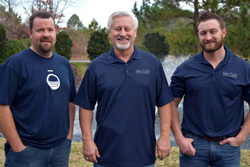
Integrated Lake Management’s (ILM) Atlanta division was founded seven years ago to deliver superior lake, pond, wetland and fisheries expertise. SOLitude’s acquisition of the division helps to strengthen SOLitude’s presence in the state of Georgia, and further enhances our ability to serve our clients across the market with a variety of premier aquatic services. Field Manager Steven King and Aquatic Scientist Peyton Woods have joined SOLitude, bringing with them expanded knowledge of the local community, public waterways and sustainable aquatic management solutions that promote healthy, vibrant ecosystems.
Also joining SOLitude are three full-time team members from Aquatic Management Services (AMS) in Texas, which was established in 1986 by Fisheries Biologist Stan Smith. Smith and his colleagues Operations Manager Cory Smith and Aquatic Specialist Jason Regester bring to SOLitude more than three decades of experiencing providing complete lake, pond and fisheries management strategies that enhance and revitalize waterbodies of all of sizes, from stormwater ponds to large lakes.
 |
 |
| Georgia Team | Tyler, Texas Team |
To go directly to the source, click here.